Kembali ke Artikel
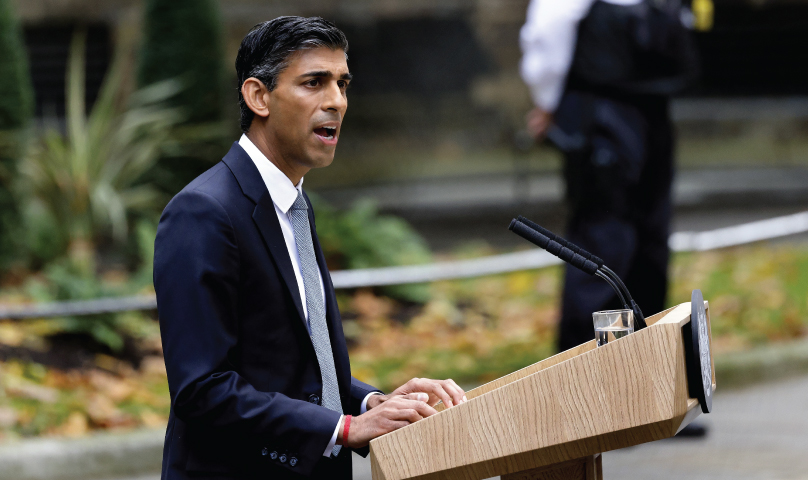
In a surprise move, the UK government announced the next general election would be held on July 4. The consensus had expected Prime Minister Sunak to wait until autumn before calling the vote or even the last possible date in January 2025 given the opposition Labour party currently has a large lead of around 20% over the ruling Conservatives in the opinion polls.
Source: Bank of Singapore, Bloomberg
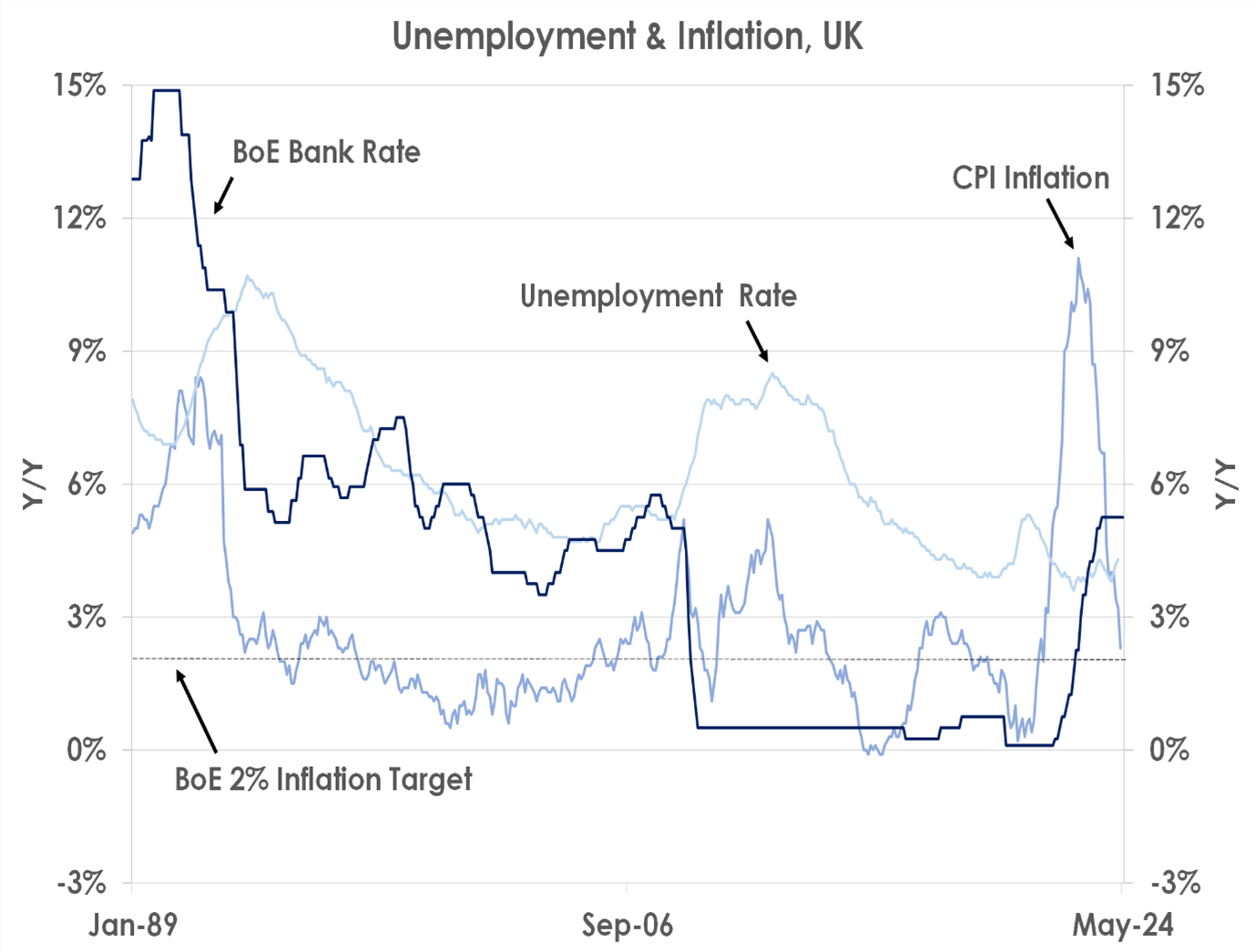
The Bank of England is unlikely now to start cutting interest rates from 5.25% in June given the upcoming election in July. Officials will not want to be seen influencing the vote by changing monetary policy beforehand. Furthermore, April’s consumer price index (CPI) data also released overnight showed core inflation stayed stubbornly high last month at 3.9% as services inflation remained strong at 5.9%.
Source: Bank of Singapore, Bloomberg
Thus, while headline inflation fell to 2.3%, close to the BoE’s 2% target as the first chart shows, officials will want more evidence underlying inflation is slowing first before starting to reduce interest rates.
The UK’s outlook, however, is still set to improve.
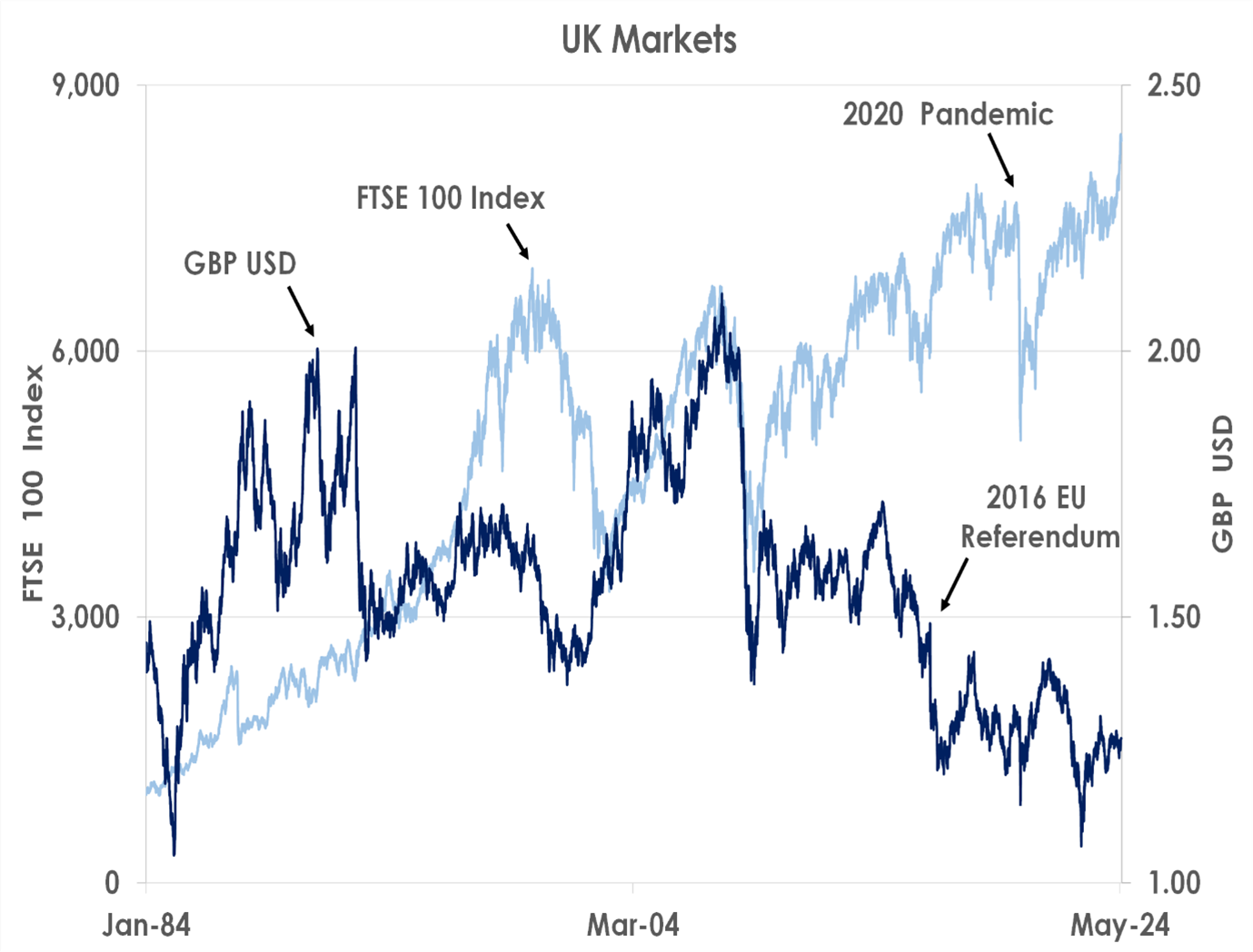
Firstly, the BoE is still likely to make two 25bps rate cuts in August and November as inflation declines. Easier monetary policy will support UK equities. The FTSE 100 has been making new all-time highs this year.
Secondly, the economy is emerging from last year’s recession. We forecast growth to accelerate from just 0.1% in 2023 to 0.8% in 2024 and 1.5% in 2025.
Thirdly, Labour seems set to win a large parliamentary majority. This should lead to a period of stability after a dismal decade of political disorder (the UK has had five prime ministers in eight years), economic instability (due to the Conservatives’ initial fiscal austerity, the 2016 vote to leave the European Union, the dire UK response to the pandemic and former PM Liz Truss’s disastrous mini-Budget in 2022) and lengthy financial market underperformance.
Fiscal policy is likely be constrained whoever wins the election as UK public debt now exceeds 100% of GDP. But a new, stable government - focusing on planning reforms to encourage more house building and a closer trading relationship with the EU - should spur renewed investment into Britain to the benefit of UK growth, domestic markets and the GBP.
This article was first published by Bank of Singapore on May 2, 2024. The Opinions expressed in this publication are those of the authors. They do not purport to reflect the opinions or views of OCBC Private Bank or its affiliates.
OCBC Private Bank provides a suite of products for wealth creation, preservation and transmission including holistic wealth management services, independent research, customized solutions for all investor preferences, and genuine open architecture, with expertise in Indonesia and Asia Pacific markets. OCBC Private Bank is a part of OCBC Group.